 Business License

Basic Knowledge of LED UV Curing Lamp Spectra
Hello everyone, I have been working in this field for many years and have a basic understanding of relevant knowledge about LED UV curing lamps. Today, I will introduce the basic knowledge of UV spectra, hoping it can be helpful to you in your work.
UV Ultraviolet Spectra
Ultraviolet light is mainly divided into three categories: UVA (315–400 nm), UVB (280–315 nm), and UVC (200–280 nm). In the UV curing industry, the UVA waveband is the primary one for application.
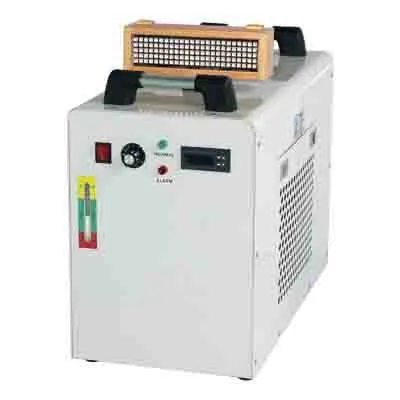
The UV light source of traditional UV curing machines generally adopts high-pressure mercury lamps, among which the 365 nm wavelength in the UVA range is the dominant spectral line of such lamps. However, high-pressure mercury lamps produce a rather rich UV spectrum that covers multiple characteristic wavelengths. In recent years, with the advancement of LED UV technology, high-power LED UV systems have been widely adopted in the UV curing industry. LED UV light sources are characterized by a single wavelength, easy controllability, high power output, more manageable process parameters during curing, and a compact size. Common wavelengths of LED UV light sources used in the industry include 365 nm, 375 nm, 385 nm, 395 nm, and 405 nm, among others.
LED UV systems can efficiently convert 15%–30% of electrical power into usable UV light. Moreover, they do not emit harmful short-wave ultraviolet rays (UVC/UVB) or long-wave infrared rays. As a result, compared with mercury lamps, LED UV systems can save more than 80% of energy.
Recently Posted
-
Introduction to Ultraviolet (UV)
April 21, 2026UV Curing is a type of radiation curing. Radiation curing is a chemical process that uses electromagnetic radiation, such as ultra Read More
 -
Advantages of Single Wavelength in LEDUV Curing Lamps
January 4, 2026Wavelength plays a crucial role in LEDUV curing, with different wavelengths tailored to specific applications. Let’s explore the f Read More
 -
Is LED UV Harmful to Human Health?
January 4, 2026LED UV has many functional advantages, but does it have any impact on human health during use, and what are the specific manifesta Read More

Contact Us
Recommended Products
-
 Power 1500w Led uv Curing LightNegotiableMOQ: 1 Combo
 -
Green and Environmentally Friendly LED UV Curing MachinesUS$ 990 - 2000MOQ: 1 Combo
-
Advantages of Single Wavelength in LED UV Curing LampsUS$ 10000MOQ: 1 Combo
-
Is LED UV Harmful to Human Health?US$ 10000MOQ: 1 Combo
-
Advantages of Single Wavelength in LED UV Curing LampsUS$ 10000MOQ: 1 Combo